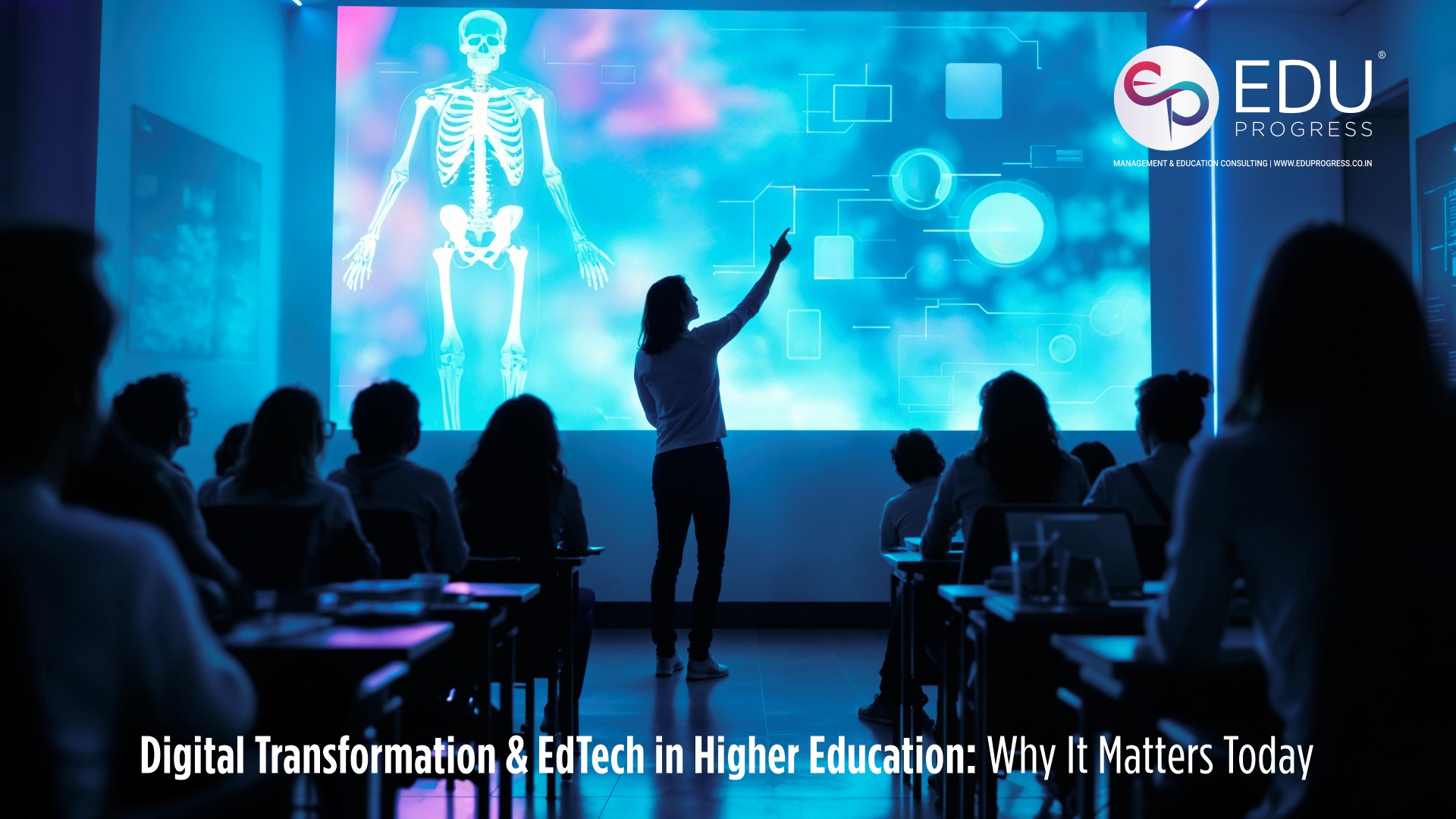
Higher education is no longer defined by classrooms alone. The rapid evolution of digital technologies, artificial intelligence (AI), and data-driven systems has fundamentally changed how universities/institutions operate, teach, and engage with students. Digital transformation is no longer a strategic option – it is a necessity for institutions that want to remain competitive, globally relevant, and student-centric.
In India, the vision of the National Education Policy 2020 strongly encourages the use of technology in education. It promotes flexible learning, digital tools, and global collaboration. Universities/institutions that adapt to this change are becoming more modern, competitive, and student-friendly.
The policy reforms such as the National Education Policy (NEP) 2020 and the Graded Autonomy Regulations introduced by the University Grants Commission have created an enabling environment for institutions to innovate and modernize their academic delivery systems. Under these reforms, select institutions that meet prescribed quality benchmarks are permitted to offer online degree programmes, thereby expanding access to higher education beyond geographical boundaries. The ability to design and deliver online and blended programmes represents a significant step in the broader process of digital transformation. It not only allows institutions to leverage digital platforms for teaching and learning but also encourages the development of flexible, technology-enabled education models that respond to the changing aspirations of learners and the evolving demands of the workforce.
What Does Digital Transformation Actually Mean?
Digital transformation goes far beyond installing smart boards or offering online classes. It involves a holistic development of academic, administrative, and student engagement systems.
It includes:
- AI-enabled learning platforms
- Smart classrooms
- Data-driven academic decision-making
- Learning Management Systems (LMS)
- Hybrid and blended learning models
- Virtual labs and simulation environments
- Digital governance and compliance systems
The goal is simple to improve learning outcomes, increase operational efficiency, and enhance student experience.
Blended Learning: The New Normal
Universities/institutions are now combining classroom instruction with digital modules, recorded lectures, virtual discussions, and AI-based assessments.
Blended learning offers:
- Greater accessibility for diverse learners
- Flexible scheduling
- Better tracking of student performance
- Interactive digital resources
It also allows universities/institutions to expand beyond geographical boundaries, attracting international students and collaborations.
AI & Data Analytics: Smarter Education Systems
Artificial Intelligence is transforming how higher education institutions function. From using data to identify students who may need extra support to recommending personalized learning content, AI is helping universities make smarter and more informed decisions.
How AI Supports Smarter Education Systems
- Personalized learning pathways
- Automated grading and feedback systems
- Smart Academic Advising
- AI Chatbots for Student Assistance
- Enhanced research capabilities
Data analytics also helps leadership teams make informed decisions regarding admissions trends, program demand, faculty workload, and resource allocation.
Micro-Credentials & Skill-Based Learning
Another major EdTech trend is the rise of micro-credentials and stackable certificates. Traditional degree structures are evolving to include short-term certifications, skill-based modules, and interdisciplinary programs.
Employers increasingly value demonstrable skills over just degrees. Micro-credentials allow students to:
- Upskill in emerging domains like AI, cybersecurity, and sustainability
- Add industry-recognized certifications alongside degrees
- Stay competitive in dynamic job markets
This aligns strongly with the objectives of the National Education Policy 2020, which encourages flexible, multidisciplinary education pathways and continuous learning models.
Globalization through Digital Infrastructure
Digital transformation also strengthens international collaborations, virtual exchange programs, online joint courses, and collaborative research platforms are making global education more accessible.
Universities/Institutions can now:
- Host international guest lectures virtually
- Conduct joint research using shared digital platforms
- Offer global certifications
- Facilitate cross-border academic partnerships
Strong digital infrastructure makes institutions more attractive for global partnerships.
Challenges in Digital Transformation
While the benefits are significant, digital transformation is not without challenges:
- Faculty resistance to change
- Lack of structured implementation strategies
- Cybersecurity risks
- Budget constraints
- Skill gaps in digital pedagogy
Many institutions invest in tools but struggle with integration. What truly matters is governance, training, alignment with institutional vision, and long-term sustainability.
This is where strategic consulting becomes critical.
How Eduprogress Helps Universities/Institutions to Lead Digital Transformation
At Eduprogress, we understand that digital transformation in higher education is not just about technology adoption – it is about institutional evolution.
Eduprogress assists universities and institutions in aligning their strategies with regulatory requirements, including frameworks outlined in the National Education Policy 2020.
The Way Forward
The future of higher education belongs to universities/institutions that are agile, innovative, and digitally empowered. Today’s students are not just seeking degrees they are seeking relevance, adaptability, and career readiness.
Digital transformation is not about replacing traditional education but it is about enhancing it. It is about blending human mentorship with technological intelligence. It is about preparing graduates not just for jobs, but for evolving careers in a rapidly changing world.
With strategic guidance from Eduprogress, universities/institutions can confidently navigate this transformation building digitally mature, globally competitive, and student-centric academic ecosystems.
